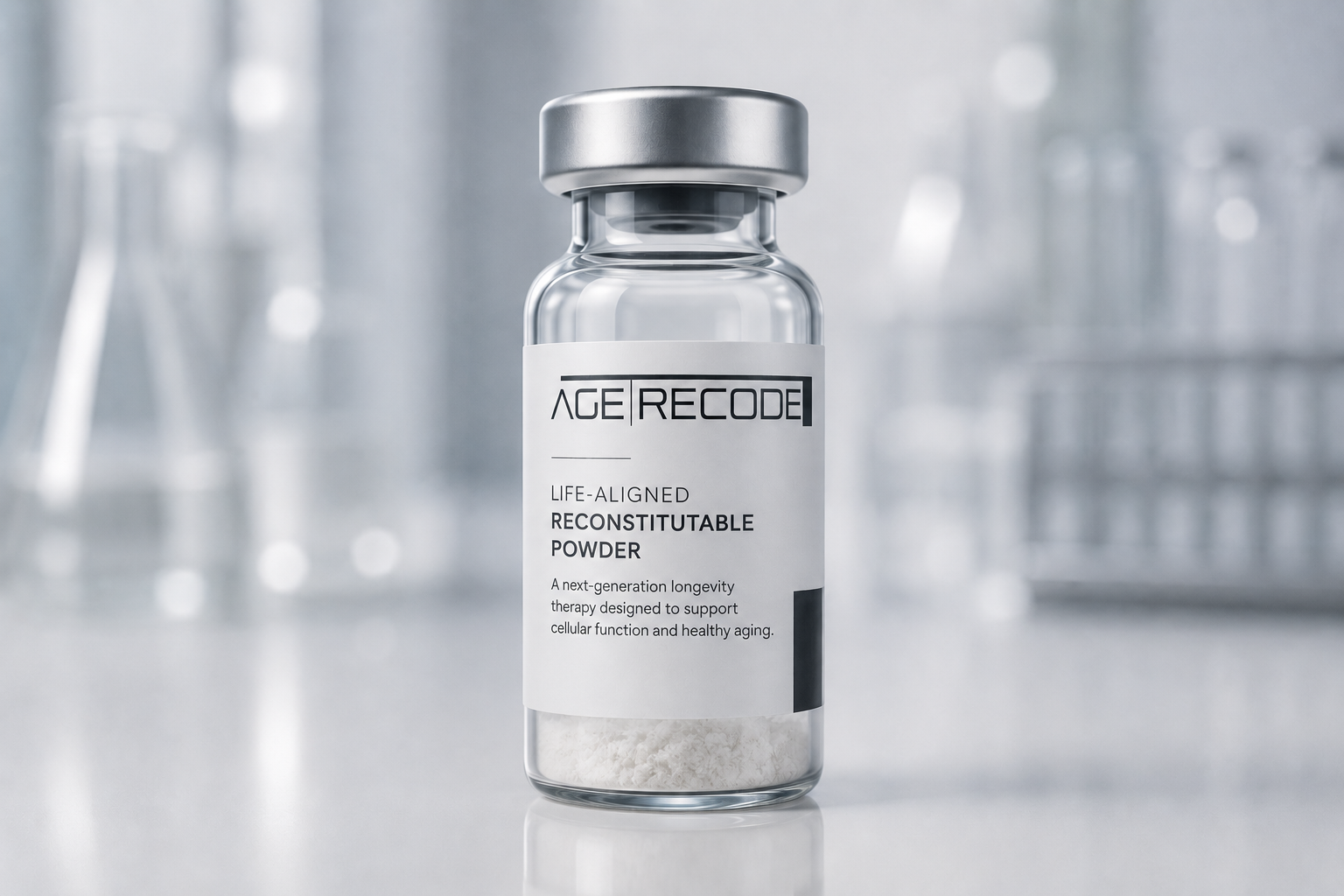
Description
Lypholized powder requiring reconstitution.
Humanin is a naturally occurring, 24-amino-acid peptide encoded by the mitochondrial DNA. It acts as a cellular master regulator, protecting cells from stress and apoptosis, and is heavily researched for its potential to promote longevity, enhance metabolic health, and fight age-related diseases.
Key Mechanisms and Health Benefits
Humanin acts as a signaling molecule that sends protective messages from the mitochondria to the rest of the cell.
-
- Neuroprotection: Originally discovered in Alzheimer’s disease patients, Humanin defends neuronal cells against amyloid-beta toxicity and other degenerative brain insults.
- Cellular & Tissue Survival: It binds to cell receptors (like FPRL1/2) and pro-apoptotic proteins (like BAX) to suppress cell death and preserve mitochondrial function under high oxidative stress.
- Longevity & Aging: Studies across multiple species—from microscopic worms to mice—show that Humanin overexpression or supplementation can extend lifespan.
- Metabolic Health: It helps improve glucose tolerance, lowers systemic inflammation, and has been studied for its ability to delay the onset of conditions like type 1 diabetes.
Levels and Supplementation
Because Humanin is a mitochondrial-derived peptide, the body’s natural circulating levels decline as you age. To combat this, synthetic Humanin analogs (such as HNG, which is significantly more potent than naturally occurring Humanin) are heavily utilized in longevity and biohacking research.
Reviews
There are no reviews yet.